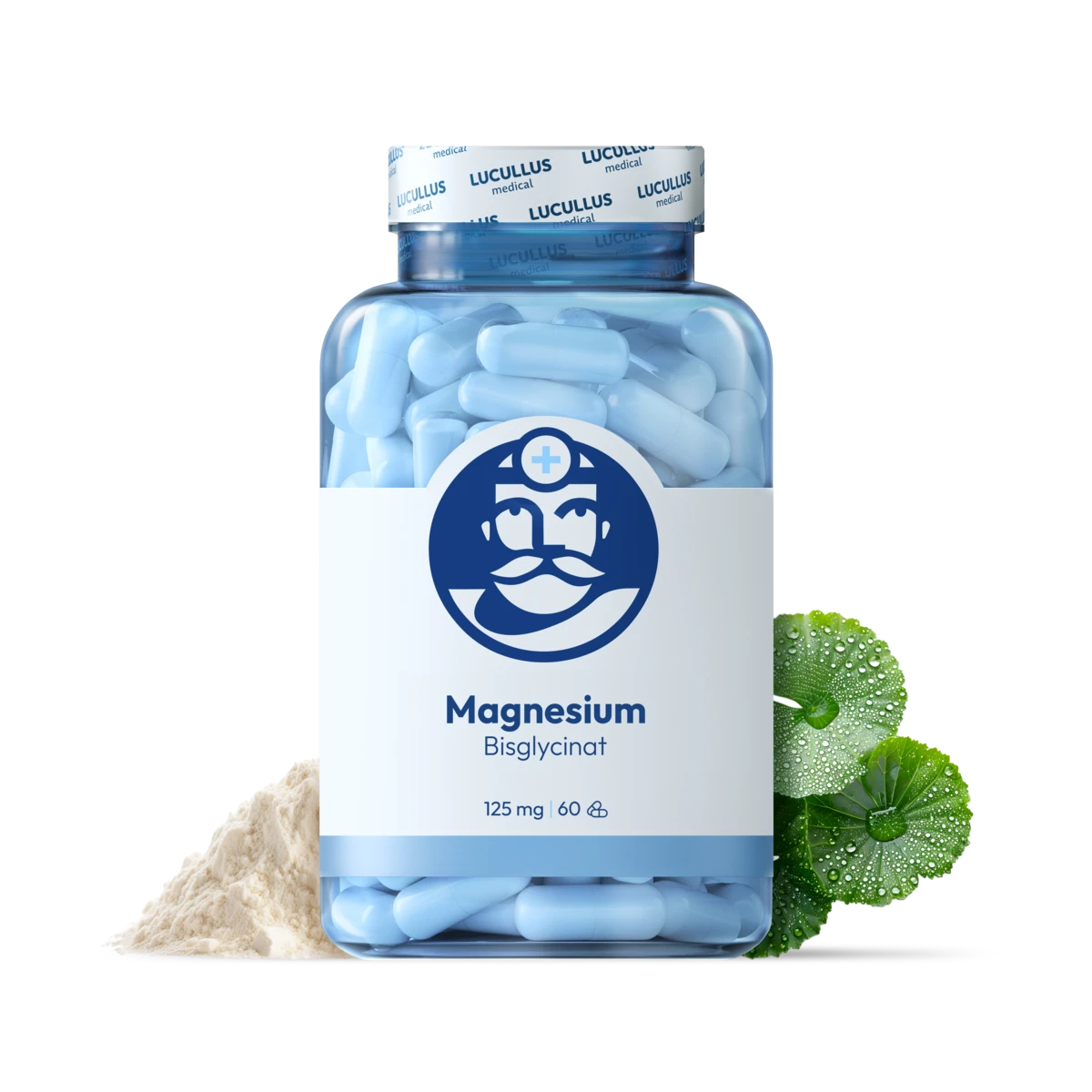
Calming Magnesium (Magnesium Bisglycinate)
Magnesium is an essential mineral for the proper functioning of the body. The name magnesium originates from the Greek city of Magnesia, where this element was first discovered in 1755. It is the 8th most abundant element on Earth, constituting about 2% of the Earth's crust. It has a naturally sour taste, which is also present in mineral waters. We find it in every cell of a green plant, and (magnesium ions are present) also in every cell of the human body. Our body needs magnesium for more than 300 biochemical processes, such as energy production and nucleic acid synthesis, maintaining the correct heart rhythm, and blood pressure. It's hard to find a process in the body that magnesium does not affect.

What is in the heart of Dr. Lucullus Multivitamin
Immune support that contains the necessary vitamins and minerals in a daily dose. The weakened immune system deteriorates the quality of life by not being able to resist infections. The first symptoms of a weakened immune system may already be that you get infected at every opportunity, or frequently repeated use of antibiotics, increased fatigue, urinary tract infections, skin problems, headaches, and many others. Regular consumption of 15 vitamins/minerals in the multivitamin complex 𝒟𝓇. 𝐿𝓊𝒸𝓊𝓁𝓁𝓊𝓈 ensures everything your body needs, creates a shield for your health and well-being.

Moringa oleifera (Drumstick Tree)
Dr. Lucullus emphasizes that not all "moringa" is the same, and we ensure our natural dietary supplements are of the highest quality. We focus on the content, purity, and effectiveness of the ingredients that contribute to your health. Here's why: By carefully processing the leaves into superfood powder form, we ensure its stability, protection, and longer shelf life.

Male vitality ... to make everything work as it should!
In today's age of daily stress, it's increasingly important to supply the body with the power of nature. Male vitality is a supplement from the most effective plants. A uniquely created formula tailored to the needs of the modern man and his active lifestyle. For more energy and increased performance at work and beyond, so you can fully experience all the adventures waiting for you.

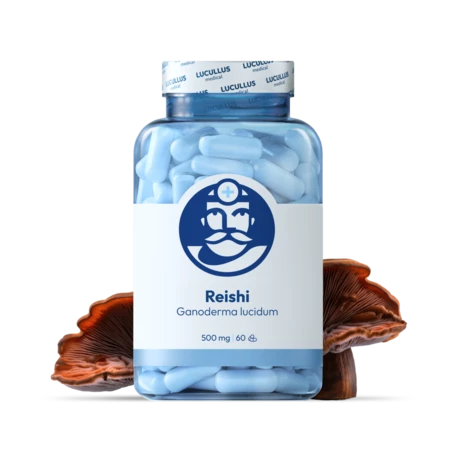
Fascinating Reishi (Ganoderma lucidum)
It is not by chance that in various countries it is referred to as the "mushroom of immortality" and the "mushroom of eternal life". In Japan, "Reishi" means "spiritual power". In China, it is known as "Lingzhi", which means "divine mushroom". It is one of the most valuable mushrooms in traditional medicine, used for the treatment of chronic diseases, and acknowledged for over 4000 years for its strong effects (similar to ginseng) documented in ancient books. It's also called the "mushroom of happiness" for its ability to alleviate ailments such as arthritis, insomnia, chest tightness, persistent weakness, high blood pressure, dizziness, mushroom poisoning, and heart diseases ...

Surprisingly Resilient Maca - Peruvian Cress
This remarkable plant (Lepidium mayenii) from the Peruvian Andes, where it is grown at extreme altitudes (4000 m a.s.l.). It is incredibly resilient and can survive and grow in conditions where most other plant species would not survive, such as low temperatures, strong winds, and intense UV radiation. Its ability to adapt to harsh environments enriches it with nutrients and substances that positively impact the human body, enhancing resistance to both physical and mental stress.